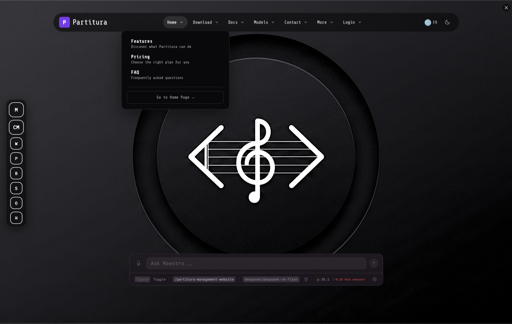
Why develop software alongside one AI agent...when you can have a whole AI team working for you?
Multi-agent Orchestration like you have never seen before.
Why Partitura is Different
What other multi-agent flows get wrong
Would a HUMAN team where the Tech Lead redirects a demand to the most fitting developer be 'multi-developer'? What if we gathered 1500 writers from the best universities in the world to write a book, would an epic fantasy novel come out in a single day if each one was only writing one page? If those scenarios wouldn't work for extremely competent and intelligent humans, why would it ever work for similarity algorithms? Experiment with real orchestration to understand the difference between "working simultaneously" and "working TOGETHER".
Orchestration should not be a switch statement
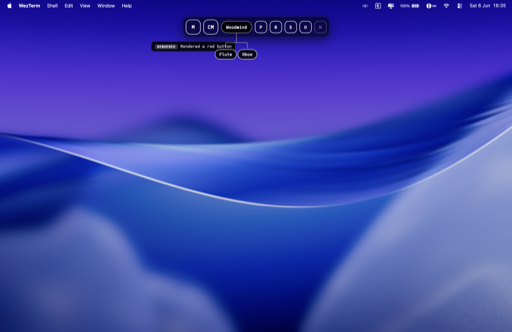
Partitura is not a router to redirect your prompts to a selected agent... It's not an agent executing asynchronous tasks, or even one that creates clones of itself to execute parallel tasks and receive the results. It is very much like a team of individual agents. Each one with their own role and tools, working and collaborating under strict coordination, until you want them to stop.
Partitura is like subagents, then? Or maybe like CrewAI?
I have to admit 'subagents' is a much closer dynamic than other 'multi-agent workflows' out there. But not exactly... in Partitura, a conductor writes no code, it doesn't even have tools to do so (Solo mode aside). Leadership is complex enough to handle, ensuring the team can work as a unit, planning the next steps and requirements while the others execute... as such, Frontend agents will waste no context with .go files, Debugger agents will waste no time implementing new features and Backend agents will know nothing about the appearance and style of the project. Each agent is an individual part of the whole. Partitura is not a framework for building agents like CrewAI, AutoGPT or LangChain. It is closer to being an IDE, while also being the platform that automatically orchestrates AI agents to work together.
Safe by design: zero data retention
No cloud servers storing a word about your projects — your data is never persisted in our system. The only information we store is your email address and the account name you choose. Payments are handled by Stripe. How requests flow depends on what you use: if you bring your own API keys (Anthropic, OpenAI, Gemini), use Ollama, or use Claude Code, Partitura only connects to our servers once for authentication — all requests go directly from your machine to the provider. We never see or touch that data. For Partitura-hosted models (100+ providers) and Voice Real-Time Communication with Maestro, requests route through our servers solely for credit deduction and to forward them to the provider. Nothing is stored — no project data, no prompts, no responses. Turn off your WiFi and Ollama keeps working exactly as it did before. Our servers are a transparent router, not a data store. Partitura won't ask for GitHub credentials or access to your repositories. Everything is handled on your machine and persisted on your machine. Uninstall Partitura and your data is gone. As always, what OpenAI, Anthropic, Google and any other providers do once your prompts reach their models is governed by their own privacy policies (available to check on each model's page in your account, with warnings on the ones that openly disclose using your data for model-training).
Simple, Credit-Based Plans
Every feature is available to every user — no paywalls. Credits are only for our hosted models. Bring your own keys or use Ollama and you never need to spend a cent.
Free
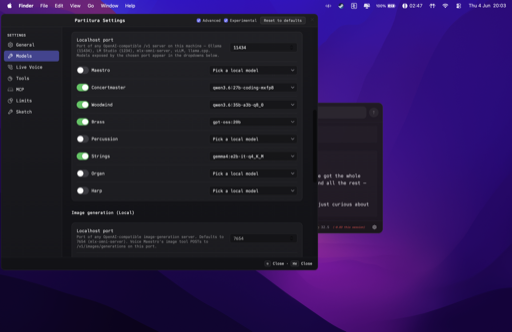
EVERYTHING is available. All sections, all features, no limits. If you have a Gemini, Claude Code, or OpenAI subscription, use Partitura 100% for free — requests go straight from your machine to the provider, nothing through our servers. Ollama works the same way, fully local. 10 welcome credits included to try our hosted models, and you can buy credit packs anytime.